

The safe return of astronauts to Earth is one of the most complex and vital phases of any space mission. While launches often capture public attention, it is the return journey that truly tests the limits of engineering, human endurance, and mission planning. In recent years, the topic of “NASA astronauts return” has gained significant global interest due to historic missions, technological advancements, and unexpected emergency scenarios.
From long-duration stays aboard the International Space Station (ISS) to deep-space missions like Artemis II, NASA has continued to refine how astronauts travel back to Earth safely. These returns are not only about bringing humans home but also about ensuring mission success, protecting lives, and advancing our understanding of space exploration.
Understanding the Critical Role of Astronaut Returns
Nasa Astronauts returns are a fundamental component of space missions, requiring the same level of precision and planning as launches. Re-entry into Earth’s atmosphere is particularly dangerous due to extreme heat, high velocity, and intense pressure changes. Spacecraft must be engineered to endure temperatures exceeding 2,700 degrees Fahrenheit while maintaining structural integrity.
The importance of safe returns goes beyond astronaut survival. Crews bring back invaluable scientific data, biological samples, and experimental findings collected during their time in space. These materials help researchers study the effects of microgravity, test new technologies, and prepare for future missions to the Moon and Mars.
Additionally, astronaut returns are a key indicator of mission success. A flawless return demonstrates that all mission systems—from propulsion to navigation and life support—have functioned correctly. This builds confidence for future missions and strengthens NASA’s reputation as a leader in space exploration.
Recent Developments in NASA Astronaut Returns
In 2026, NASA has been at the forefront of global attention due to several significant astronaut return events. One of the most notable is the Artemis II mission, which marked humanity’s return to deep-space crewed missions beyond low Earth orbit. After traveling hundreds of thousands of miles around the Moon, astronauts began their journey back to Earth using a carefully planned trajectory.
This mission demonstrated NASA’s ability to safely return astronauts from deep space, a feat not achieved since the Apollo era. The return involved high-speed atmospheric re-entry and a controlled splashdown in the Pacific Ocean. The success of Artemis II has reinforced confidence in future lunar missions and long-term plans for Mars exploration.
At the same time, NASA has managed routine and emergency returns from the ISS. In one instance, astronauts were brought back earlier than scheduled due to a medical concern. This marked a milestone in space safety, showing that rapid evacuation procedures are effective and reliable when needed.
Artemis II and the Evolution of Deep Space Returns
The Artemis II mission represents a major leap forward in human spaceflight. Unlike ISS missions that remain in low Earth orbit, Artemis II ventured into deep space, requiring a completely different approach to astronaut return systems. The Orion spacecraft used in this mission is specifically designed for long-distance travel and high-speed re-entry.
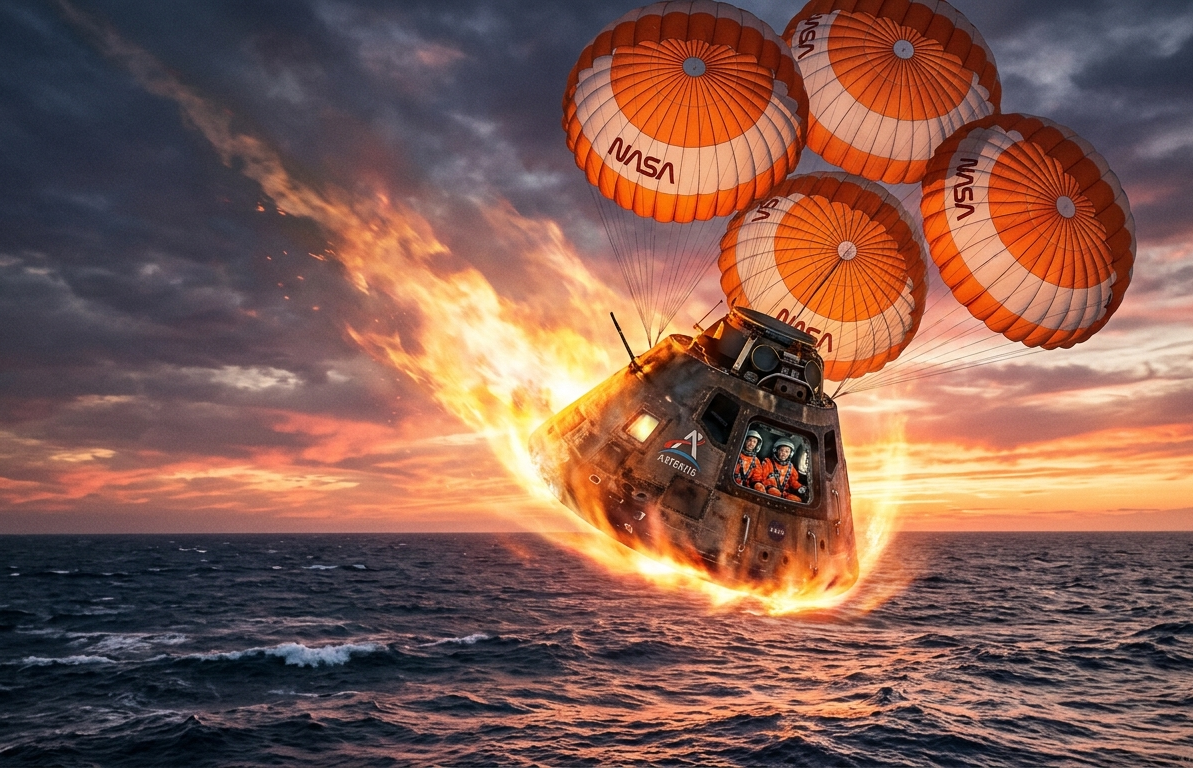
During the return phase, Orion entered Earth’s atmosphere at speeds approaching 25,000 miles per hour. This required advanced heat shield technology capable of withstanding extreme thermal stress. The spacecraft used an ablative heat shield that gradually burned away, dissipating heat and protecting the crew inside.
Another key feature of Artemis II was its free-return trajectory. This path ensured that even in the event of a system failure, the spacecraft would naturally loop around the Moon and return to Earth. This built-in safety mechanism highlights NASA’s commitment to minimizing risk in deep-space missions.
International Space Station Returns and Routine Missions
While deep-space missions capture headlines, most NASA astronaut returns occur from the ISS. These missions typically last around six months and involve scientific research, maintenance, and international collaboration. Astronauts living on the ISS experience microgravity, which significantly impacts the human body.
Returning from the ISS involves a well-coordinated process. Astronauts board spacecraft such as Crew Dragon, undock from the station, and begin their descent toward Earth. The journey usually takes several hours and ends with a parachute-assisted splashdown in the ocean.
These routine returns are critical for maintaining continuous human presence in space. They also provide valuable data on long-term human adaptation to microgravity. Each return contributes to improving safety protocols and refining spacecraft technology.
The Science Behind Re-Entry and Landing
Re-entry into Earth’s atmosphere is one of the most dangerous phases of space travel. As the spacecraft descends, it encounters increasing atmospheric density, causing friction that generates intense heat. Without proper protection, this heat would destroy the spacecraft.
To manage this, spacecraft are equipped with heat shields made from specialized materials. These materials absorb and dissipate heat, preventing it from reaching the interior of the vehicle. The design of the heat shield is crucial, as even minor flaws can lead to catastrophic failure.
Landing systems are equally important. Most modern spacecraft use parachutes to slow their descent before splashdown. Some future designs may include controlled landings on solid ground. Recovery teams are stationed nearby to quickly reach the spacecraft and assist astronauts after landing.
Physical and Psychological Effects on Returning Astronauts
Astronauts face significant physical challenges when returning to Earth. Extended time in microgravity leads to muscle atrophy, bone density loss, and changes in fluid distribution within the body. Upon return, astronauts often experience dizziness, fatigue, and difficulty walking.
Rehabilitation begins almost immediately after landing. NASA has developed structured recovery programs that include physical therapy, strength training, and cardiovascular exercises. These programs help astronauts regain their physical capabilities and adapt back to Earth’s gravity.
Psychological effects are also considered. Living in space for extended periods can impact mental health due to isolation and confinement. NASA provides support systems to help astronauts transition back to normal life. These efforts ensure that astronauts recover both physically and mentally.
Emergency Returns and NASA’s Safety Systems
Emergency returns are rare but critical scenarios that require immediate action. NASA has established comprehensive safety protocols to handle situations such as medical emergencies, equipment failures, or environmental hazards aboard spacecraft.
In recent missions, NASA successfully conducted an emergency return from the ISS due to a crew member’s medical condition. The ability to bring astronauts back quickly demonstrates the effectiveness of modern spacecraft and mission planning. It also highlights the importance of having backup systems in place.
Safety systems include continuous monitoring of spacecraft performance, real-time communication with mission control, and redundant technologies to prevent failure. These measures ensure that astronauts can return safely even in unexpected situations.
Technological Innovations Improving Astronaut Returns
Advancements in technology have significantly improved the safety and efficiency of astronaut returns. Modern spacecraft are equipped with sophisticated navigation systems that use GPS, onboard computers, and ground-based tracking to guide their descent.
Heat shield technology has also evolved, with new materials offering better protection and durability. Parachute systems have been refined to ensure stable and controlled landings. These innovations reduce risks and enhance overall mission reliability.
Additionally, private companies have contributed to these advancements. Collaboration between NASA and commercial partners has accelerated the development of reusable spacecraft and cost-effective return systems. This partnership is shaping the future of human spaceflight.
Future Missions and the Challenge of Mars Returns
Looking ahead, NASA’s focus is on expanding human presence beyond the Moon and eventually reaching Mars. These missions will present new challenges for astronaut returns due to the vast distances involved. A return from Mars could take several months, requiring advanced life-support systems and robust spacecraft design.
Future return systems may incorporate artificial intelligence to assist with navigation and decision-making. Automated systems could improve precision and reduce the burden on astronauts during critical phases of the mission. Reusable spacecraft are also expected to play a key role in reducing costs and increasing sustainability.
The lessons learned from current missions are essential for preparing for these future challenges. Each successful return brings NASA closer to achieving its long-term exploration goals and ensuring the safety of astronauts on even more ambitious missions.
Why Astronaut Returns Matter for Humanity
Astronaut returns symbolize the success of human exploration and the ability to overcome extreme challenges. They demonstrate the effectiveness of science, engineering, and international collaboration in achieving seemingly impossible goals.
These missions also inspire people around the world. They show that humanity can push beyond its limits and explore new frontiers while maintaining a strong commitment to safety. The knowledge gained from these missions benefits not only space exploration but also life on Earth.
Ultimately, the safe return of astronauts is a testament to human ingenuity and determination. As NASA continues to explore deeper into space, the ability to bring astronauts home safely will remain a cornerstone of its mission and a symbol of progress for all humankind.
READ MORE: VELORATIMES
