

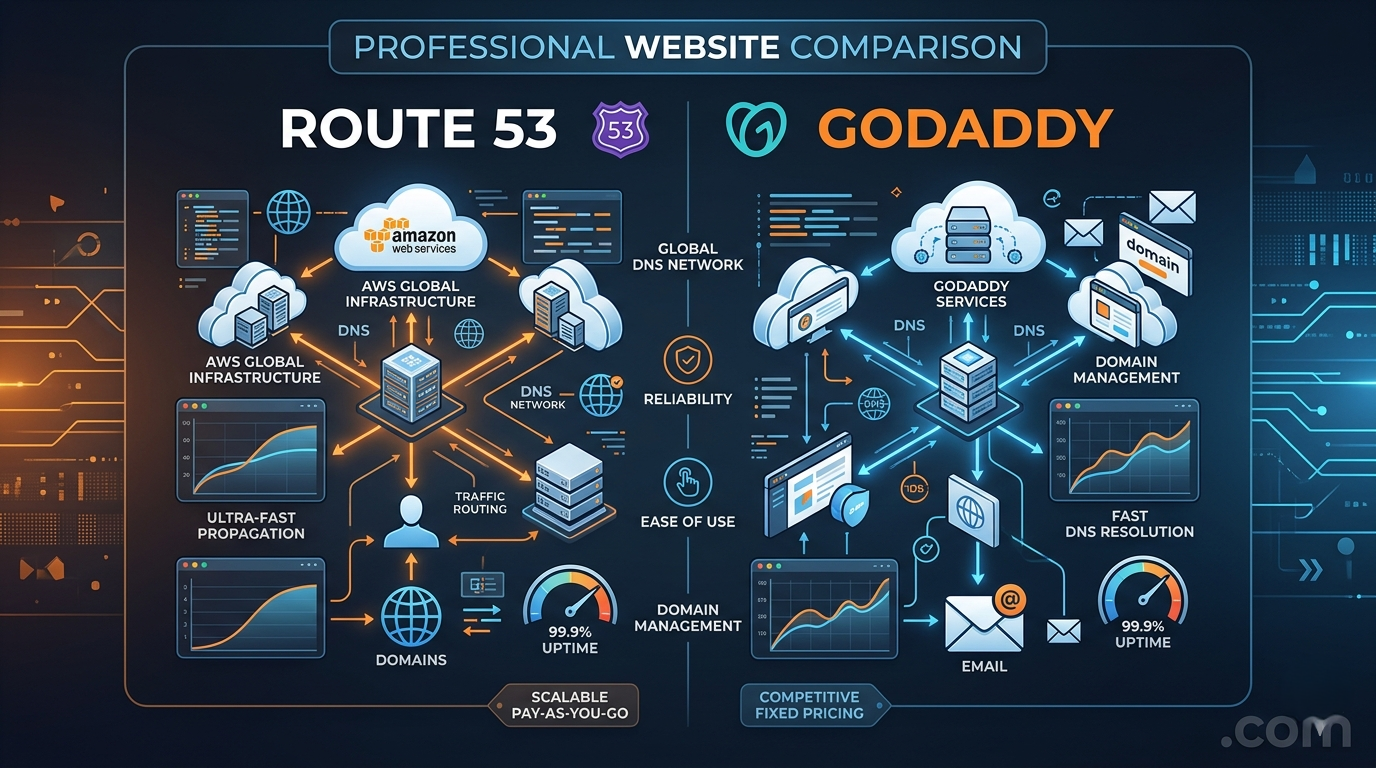
When people compare Amazon Route 53 vs GoDaddy, they are really deciding how they want to manage their domain names and DNS infrastructure. Both platforms play a crucial role in connecting users to websites, but they approach the problem from very different perspectives. One is deeply rooted in cloud computing and scalability, while the other focuses on simplicity and accessibility.
As more businesses move online, choosing the right DNS provider becomes a foundational decision. Whether you are launching a small blog, managing an eCommerce site, or running a global SaaS application, your DNS service affects performance, uptime, and security. Understanding how Route 53 and GoDaddy differ helps ensure you choose a solution that aligns with your technical needs and long-term goals.
Understanding the Core Purpose of Route 53 and GoDaddy
Route 53 is a highly scalable Domain Name System service designed to route end-user requests to applications running in the cloud or on traditional servers. It is part of Amazon Web Services and is built for developers, engineers, and enterprises that require precise control over traffic routing and infrastructure behavior. Its core purpose is not just domain management but intelligent traffic handling.
GoDaddy, on the other hand, is widely known as one of the largest domain registrars in the world. Its primary purpose is to help users register domain names, host websites, and manage basic DNS settings in a simple and user-friendly environment. It is designed for convenience, making it especially popular among beginners and small business owners who want an all-in-one solution without technical complexity.
DNS Management Capabilities and Technical Depth
DNS management is where the difference between Route 53 and GoDaddy becomes more apparent. GoDaddy offers standard DNS features that allow users to manage records like A, CNAME, MX, and TXT with ease. Its interface is straightforward, enabling users to make quick changes without needing deep technical knowledge.
Route 53 provides a much more advanced set of capabilities. It supports sophisticated routing policies such as latency-based routing, weighted routing, geolocation routing, and failover configurations. These features allow businesses to direct traffic intelligently based on user location, server health, or performance metrics. This level of control is particularly valuable for applications that operate across multiple regions or require high availability.
Performance, Speed, and Global Infrastructure
Performance is a critical factor when choosing a DNS provider, and Route 53 is designed with global scalability in mind. It uses a distributed network of edge locations and Anycast routing to ensure that DNS queries are resolved as quickly as possible. This infrastructure minimizes latency and improves user experience, especially for global audiences.
GoDaddy also offers reliable DNS performance, but it is generally optimized for standard website usage rather than high-performance applications. For most small to medium websites, the difference in speed may not be noticeable. However, for businesses that rely on real-time data or global traffic distribution, Route 53 provides a clear advantage in terms of speed and consistency.
Pricing Structure and Cost Considerations
Pricing is another area where these two platforms differ significantly. GoDaddy follows a straightforward pricing model, where DNS services are typically included with domain registration. Users pay an annual fee for their domain and receive basic DNS management as part of the package. This simplicity makes it easy to budget and understand costs.
Route 53 uses a pay-as-you-go model, which means users are charged based on hosted zones, DNS queries, and additional features such as health checks. While this model offers flexibility and scalability, it can be more complex to manage. Costs may vary depending on usage, making it important for users to monitor their activity and understand how pricing works.
Ease of Use and User Experience
Ease of use is one of GoDaddy’s strongest advantages. Its interface is designed for non-technical users, with guided steps and clear instructions for setting up domains and managing DNS records. This makes it an excellent choice for beginners who want to get started quickly without learning complex systems.
Route 53, in contrast, has a steeper learning curve. It requires familiarity with cloud concepts such as hosted zones, resource records, and access permissions. While this complexity may be challenging for beginners, it provides a high level of flexibility for advanced users. Developers and engineers often prefer this level of control because it allows them to customize their infrastructure in detail.
Security, Reliability, and Uptime
Security and reliability are essential for any DNS provider, and both platforms offer strong solutions in this area. Route 53 benefits from the robust infrastructure of Amazon Web Services, including built-in protection against distributed denial-of-service attacks and advanced monitoring capabilities. Its architecture is designed to maintain high availability even under heavy traffic conditions.
GoDaddy also provides reliable DNS services with solid uptime and security features. It offers network-level protection and optional upgrades for enhanced performance. While it may not match the enterprise-level resilience of Route 53, it is more than sufficient for most websites and small businesses that require dependable service.
Integration and Ecosystem Differences
Integration is a key factor that sets Route 53 apart. As part of the AWS ecosystem, it integrates seamlessly with services like load balancers, content delivery networks, and cloud storage. This allows businesses to automate processes, scale applications, and manage traffic efficiently within a unified environment.
GoDaddy offers a broader but less specialized ecosystem. It includes website builders, hosting services, email solutions, and marketing tools, making it a convenient choice for users who want everything in one place. While it does not provide the same level of deep integration as AWS, it covers a wide range of needs for general users.
Use Cases and Ideal Applications
The choice between Route 53 and GoDaddy often depends on the specific use case. GoDaddy is ideal for individuals, bloggers, and small businesses that need a simple and reliable way to manage domains and basic DNS settings. Its ease of use and bundled services make it a practical option for those who prioritize convenience.
Route 53 is better suited for developers, startups, and enterprises that require advanced features and scalability. It is particularly valuable for applications that operate on a global scale or rely on cloud infrastructure. Organizations that need precise control over traffic routing and high availability often choose Route 53 for its capabilities.
Final Thoughts on Route 53 vs GoDaddy
Choosing between Route 53 and GoDaddy ultimately comes down to your technical requirements and long-term goals. GoDaddy offers simplicity, affordability, and ease of use, making it an excellent choice for general users and small projects. Route 53, on the other hand, provides advanced features, high performance, and seamless integration with cloud services.
Both platforms have their strengths, and neither is universally better than the other. By understanding how each one works and what it offers, you can make an informed decision that supports your website’s performance, security, and growth. In the end, the best choice is the one that aligns with your specific needs and level of expertise.
READ MORE: VELORATIMES
